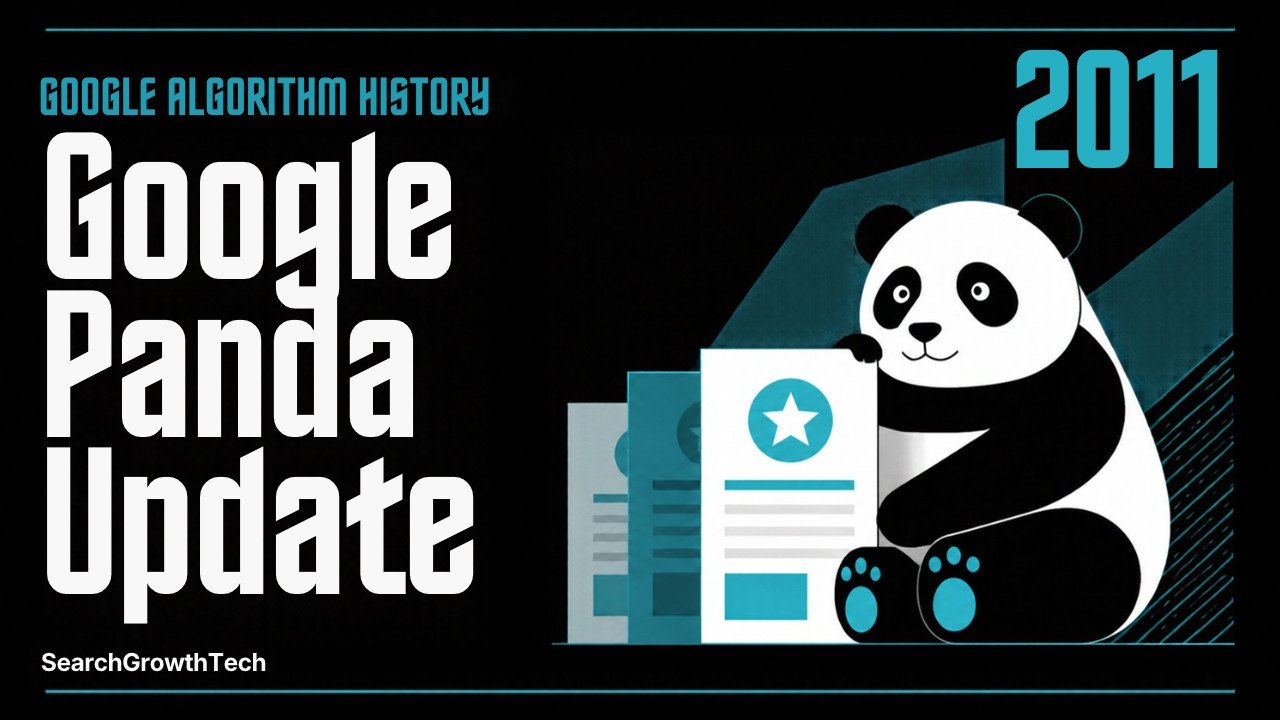
The Google Panda update was a ranking change launched in February 2011 to push low-quality sites down in search results and reward sites with original, useful content. Google said the first version noticeably affected 11.8% of queries in the U.S.
Panda mainly hit thin, copied and low-value content, including the “content farms” that had grown large by publishing huge volumes of shallow articles. It was updated many times over the following years and became part of Google’s core ranking systems in 2015.
Here is what Panda was, how it worked, its major versions, and how its ideas still shape SEO today.
Watch: Google Panda Update Explained
What Was The Google Panda Update?
Panda was an algorithm designed to judge the quality of sites and lower the rankings of those offering little value. Google announced it on its official blog on February 24, 2011, describing it as a change to find more high-quality sites in search.
Unlike many updates, Panda got its name from Google. In an interview with Wired shortly after launch, Google’s Amit Singhal said it was named after an engineer called Panda, widely identified as Google engineer Navneet Panda. Before that name came out, Danny Sullivan of Search Engine Land had nicknamed it the “Farmer” update, because it seemed aimed at content farms.
Google Panda: Key Facts
| Item | Details |
|---|---|
| Launch date | February 2011 (announced February 24, 2011) |
| Announced by | Google, on its official blog |
| What it targeted | Low-quality, thin and copied content, and sites that were generally unhelpful |
| What it rewarded | Sites with original research, in-depth reports and thoughtful analysis |
| % of queries affected | 11.8% of U.S. queries at launch |
| Nicknames | “Farmer” (coined by Danny Sullivan); Panda was Google’s own name |
| Status today | Part of Google’s core ranking systems since 2015; listed by Google as a retired system |
Why Did Google Launch Panda?
By 2010, many searches were returning pages that technically matched the query but did not help much. Some sites published thousands of short, formulaic articles targeting popular searches. Others copied content from elsewhere. Users and journalists were openly criticizing the quality of Google’s results.
Google’s announcement said the update was meant to reduce rankings for sites that added little value for users, copied content from other sites, or were simply not very useful. At the same time, it aimed to lift sites with original content and information.
Google also said Panda did not use data from its Personal Blocklist Chrome extension, which let users block sites from their results. But when Google compared the two, the algorithm addressed 84% of the most-blocked sites, which Google took as a sign it was on the right track.
How Did Panda Work?
Google never published Panda’s formula, but its own guidance and statements make the main targets clear:
- Thin content: pages with little substance that did not fully answer the searcher’s question.
- Copied or scraped content: pages that republished material from other sites without adding anything.
- Duplicate and overlapping pages: many near-identical articles on the same topic with small keyword variations.
- Heavy ads: pages where ads distracted from or got in the way of the main content.
- Low trust: content that readers would not trust, written without real expertise.
Panda worked at the site level. A large amount of low-quality content could hold back rankings across a whole site, not only on the weak pages.
In May 2011, Amit Singhal published a list of 23 questions to help site owners think about quality the way Google does. They included whether you would trust the information, whether an expert wrote it, whether the site had duplicate articles, and whether you would be comfortable giving the site your credit card details.
Google Panda Timeline
Panda was rerun and refined many times. These are the most notable versions:
| Date | Version | What Changed |
|---|---|---|
| February 2011 | Panda launch | U.S. only; 11.8% of queries affected |
| April 2011 | Global English rollout | Expanded to English-language searches worldwide |
| August 2011 | Other languages | Expanded to all languages except Chinese, Japanese and Korean; typically 6 to 9% of queries |
| May 2014 | Panda 4.0 | Announced by Matt Cutts; about 7.5% of English queries |
| September 2014 | Panda 4.1 | Reported at 3 to 5% of queries |
| July 2015 | Panda 4.2 | 2 to 3% of queries; a slow rollout over several months |
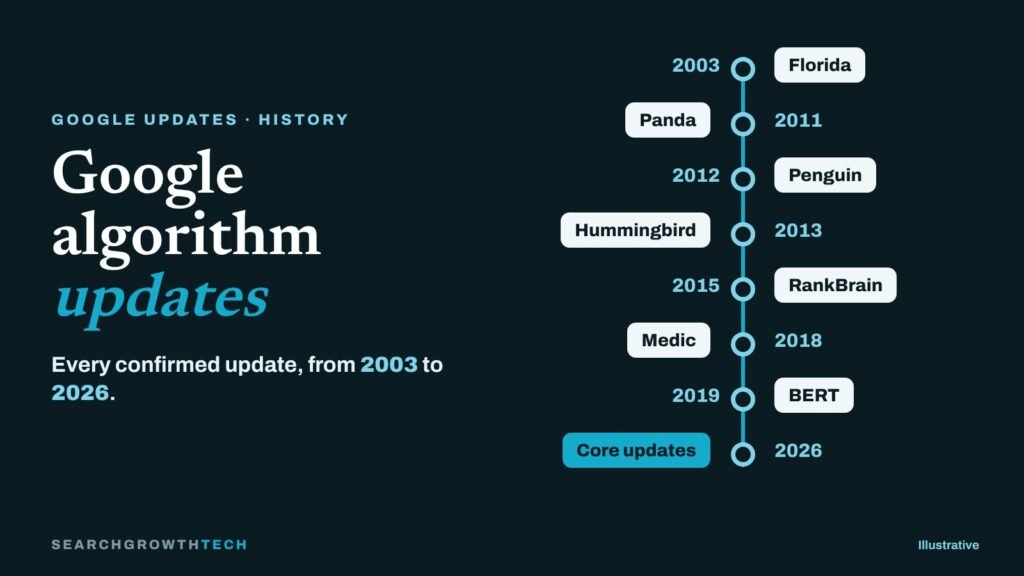
| 2015 to 2016 | Core integration | Panda became part of Google’s core ranking systems, confirmed publicly in January 2016 |
Before it became part of the core systems, Panda ran periodically. Sites hit by it often had to wait for the next refresh to see any recovery.
Who Was Hit By Panda?
The update was widely reported to hit content farms, article directories, scraper sites and sites with large amounts of thin or duplicated content. Sites with original, in-depth content were widely reported to gain.
For many publishers, Panda was a turning point. It made overall site quality a ranking issue, not just page-level optimization.
What Panda Means For SEO Today
Panda no longer exists as a separate system, but its thinking runs through Google’s current approach to quality:
- Core ranking systems: Google says Panda became part of its core ranking systems in 2015. Every core update since builds on the idea of rewarding genuinely useful content.
- Helpful content: Google’s helpful content system, launched in 2022 and now part of its core ranking systems, shares Panda’s focus on whether content is written for people or for search engines.
- Self-assessment questions: Google’s guidance on creating helpful, reliable, people-first content offers an updated version of the questions first published after Panda.
- E-E-A-T: Panda’s questions about trust and expertise live on in Google’s emphasis on experience, expertise, authoritativeness and trust.
- Prune and improve: because quality is judged across a site, improving, merging or removing weak pages can still help.
For more context, see our complete list of Google algorithm updates, or read about the update that followed a year later, Google Penguin.
Key Takeaways
- Google Panda launched in February 2011 and affected 11.8% of U.S. queries at first.
- It targeted thin, copied and low-value content, and rewarded original, useful sites.
- Panda was named after Google engineer Navneet Panda; “Farmer” was an industry nickname.
- It was refreshed many times before becoming part of Google’s core ranking systems in 2015.
- Its ideas continue in Google’s helpful content guidance, E-E-A-T and core updates.
FAQs
When Did The Google Panda Update Launch?
Panda launched in the U.S. in February 2011, with Google announcing it on February 24, 2011. It rolled out to English searches worldwide in April 2011 and to most other languages in August 2011.
Why Is It Called Panda?
Google named it after an engineer named Panda, widely identified as Navneet Panda, who helped make the breakthrough behind the algorithm.
Is Google Panda Still Active?
Not as a separate system. Google lists Panda as retired because it became part of its core ranking systems in 2015. The quality ideas behind it are still very much in use.
How Do You Recover From Panda-Style Quality Problems?
Focus on the whole site. Improve or consolidate thin pages, remove copied content, reduce intrusive ads and make sure your content is genuinely useful to readers. Recovery usually takes time and shows up after core updates.