RankBrain is a machine learning system that Google uses to understand searches and rank results. Google first revealed it on October 26, 2015, in an interview with Bloomberg, after it had already been running for several months.
RankBrain helps Google work out how words relate to real-world concepts. That means it can return useful results even when a page does not contain the exact words someone searched for.
Google has described RankBrain as the first deep learning system it deployed in Search. Unlike many older algorithms, it is still in use today.
What Is Google RankBrain?
RankBrain is an AI system that is part of Google’s ranking process. Its job is to better understand the meaning behind a query, especially one that is unusual, ambiguous or new, and then help rank the pages that best match that meaning.
Google’s own example from 2022: someone searches for “the title of the consumer at the highest level of a food chain.” RankBrain can connect that to the concept of an apex predator and return results about it, even though the searcher never used that term.
RankBrain is one of the milestones in our complete list of Google algorithm updates.
Google RankBrain Key Facts
| Item | Details |
|---|---|
| Introduced | 2015; publicly revealed October 26, 2015 |
| Revealed by | Greg Corrado, a senior research scientist at Google, in a Bloomberg interview |
| What it does | Uses machine learning to relate words to concepts and help rank results |
| Queries affected | At launch, “a very large fraction” of queries; by June 2016, reported to be involved in every query |
| Ranking importance | Described in 2015 as the third most important ranking signal |
| Status today | Still in use; listed as a current system in Google’s ranking systems guide |
Why Google Launched RankBrain
Google sees a huge number of searches it has never seen before. In 2015, it said about 15% of the searches it received each day were brand new.
Rules written by engineers struggle with queries nobody has typed before. Google needed a system that could make a good guess about what an unfamiliar query meant, based on what it had learned from past searches.
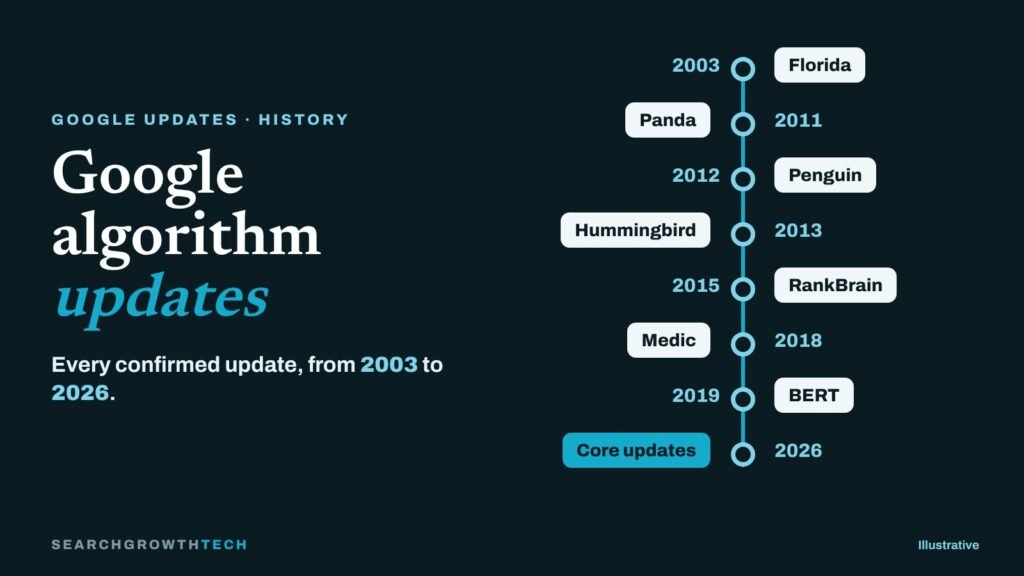
RankBrain built on the direction set by Hummingbird in 2013, which shifted Google toward understanding the meaning of whole queries. RankBrain added machine learning to that effort.
How RankBrain Works
Google has shared only a general description. What is widely documented:
- Words as concepts: RankBrain represents words and phrases in a way that lets Google see which ones are related in meaning, even if they look nothing alike.
- Handling the unfamiliar: when a query includes words or phrasing Google does not recognize, RankBrain can guess at similar queries with a similar meaning.
- Part of ranking: it is one input among many signals. It helps decide which results best match a query, not whether a page is high quality on its own.
- Trained in advance: RankBrain is trained on past search data rather than learning live from each search as it happens.
Bloomberg also reported an internal test in which Google search engineers guessed which pages Google would rank top about 70% of the time, while RankBrain got it right about 80% of the time.
How Important Is RankBrain?
In the 2015 Bloomberg interview, Corrado said RankBrain had quickly become the third most important of the hundreds of signals Google uses.
In March 2016, Google’s Andrey Lipattsev said the top two signals were content and links pointing to a site, with no fixed order between them. That made RankBrain the third.
In June 2016, Search Engine Land reported, based on information from Google, that RankBrain was now involved in processing every query, though it did not change the rankings for all of them.
Who Was Hit By RankBrain?
RankBrain did not target a type of site, and there was no single launch day when rankings moved. It ran for months before anyone outside Google knew about it.
Its effect was on matching. Pages that answered the real need behind a query became easier for Google to find, even if they did not repeat the query’s exact words. Pages that leaned on exact keyword matching without matching the intent had less of an advantage.
What RankBrain Means For SEO Today
RankBrain is still part of Search. Google’s ranking systems guide lists it as a current system, and in 2022 Google’s Pandu Nayak described it as one of the major AI systems powering Search.
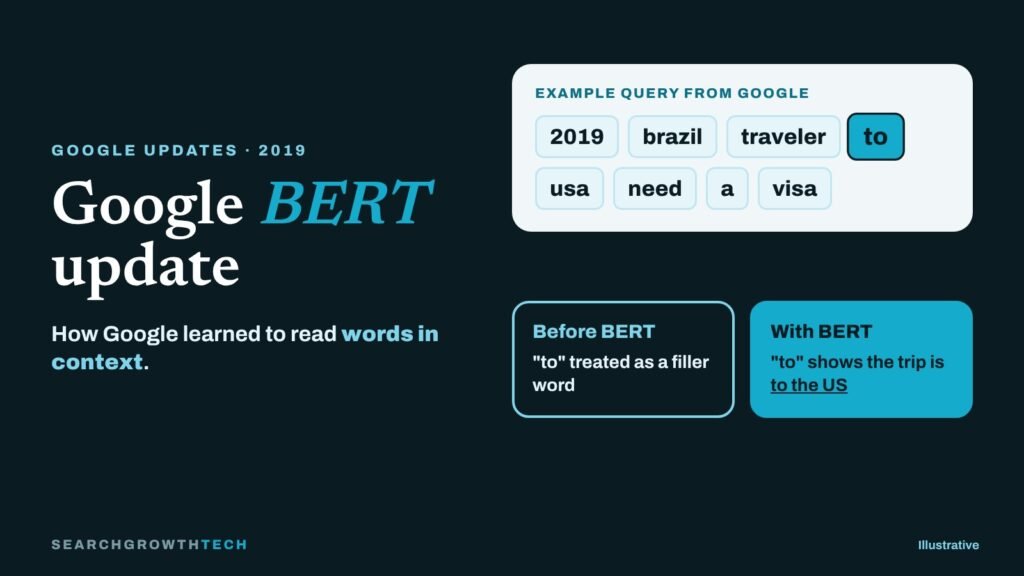
It now works alongside newer language systems, including BERT, which reads words in the context of the full sentence. Together, they mean Google is far better at understanding meaning than it was a decade ago.
There is no RankBrain-specific trick. What helps:
- Write naturally. Use the words your audience uses, without forcing an exact phrase into every heading.
- Answer the intent. Work out what someone searching that phrase actually wants, and give them that.
- Cover topics fully. Related concepts, terms and questions help show what a page is about.
- Avoid near-duplicate pages for keyword variations. Google understands that many phrasings mean the same thing, so one strong page usually beats several thin ones.
- Keep quality high. RankBrain helps with matching, but content quality and links remain core signals.
Key Takeaways
- RankBrain is a machine learning ranking system that Google revealed on October 26, 2015.
- Google calls it the first deep learning system it deployed in Search.
- It helps Google relate words to concepts, which is especially useful for new and ambiguous searches.
- It was called the third most important ranking signal and was reported to be involved in every query by June 2016.
- It is still in use, so writing naturally for searcher intent remains the best approach.
FAQs
Is RankBrain Still Used?
Yes. Google’s ranking systems guide lists RankBrain as a current ranking system.
Can You Optimize For RankBrain?
Not directly. RankBrain helps Google understand queries and match pages to them. Clear, helpful content that answers the searcher’s real need is the best way to benefit.
What Is The Difference Between RankBrain And BERT?
RankBrain, from 2015, helps relate words to concepts. BERT, from 2019, helps Google understand how the words in a query work together in context. Both are used in Search.
Was RankBrain An Algorithm Update?
It was a new system added to Google’s ranking process, rather than a one-time update. It ran quietly for months before Google talked about it publicly.