AI in Google Search didn’t start with AI Overviews. Google has used machine learning to understand images, words and queries for more than a decade. A Google Search engineering director recently explained why it arrived slowly, piece by piece, and why each new system was built in isolation first.
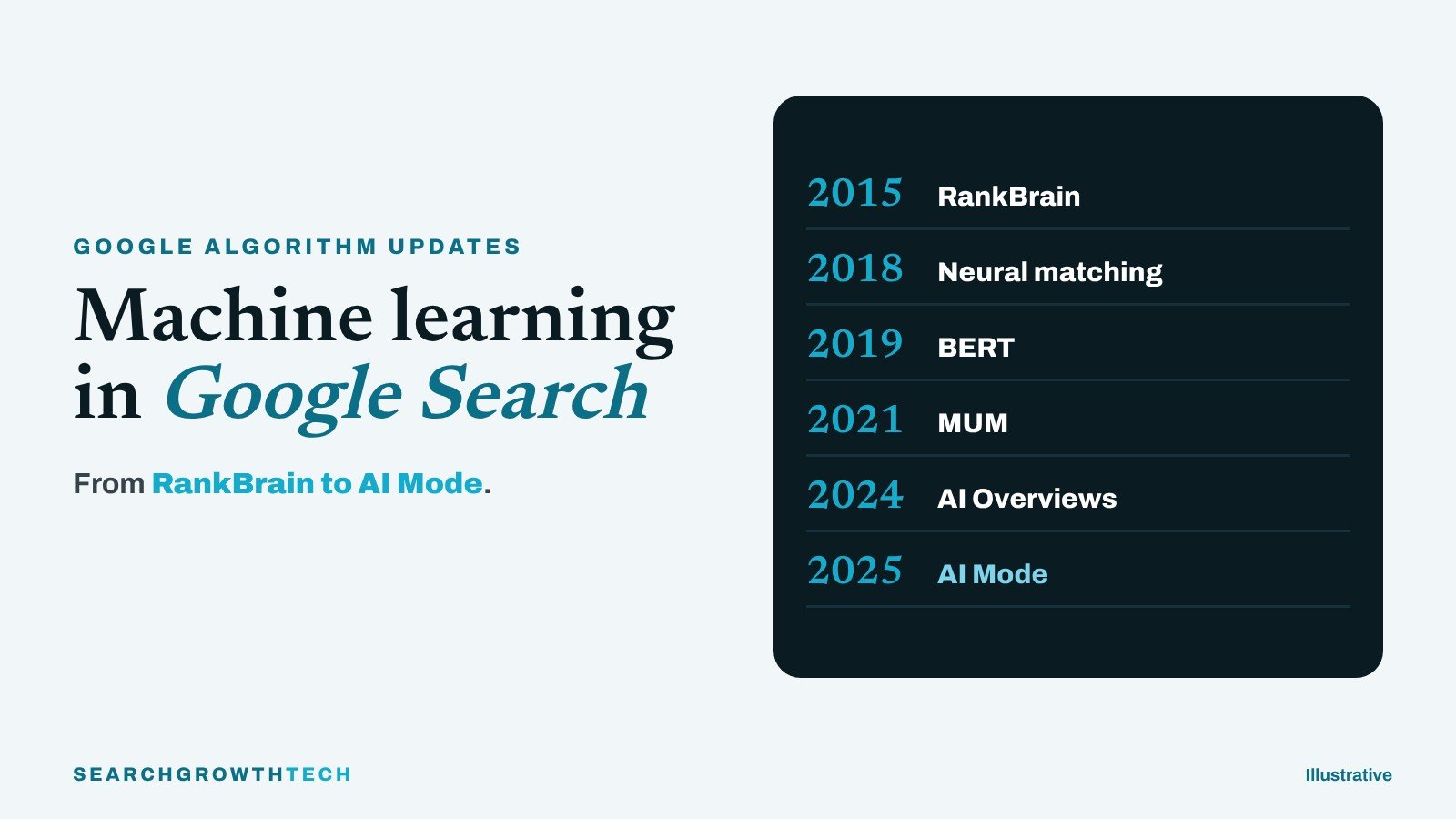
In short: Google’s first big machine learning uses in Search were image models for SafeSearch, followed by RankBrain in 2015, its first deep learning system in Search. Neural matching (2018), BERT (2019) and MUM (2021) improved how Search understands language. AI Overviews (2024) and AI Mode (2025) added generated answers on top. Each system was added as a separate signal or layer, because complex models are hard to debug.
Why Machine Learning Came to Search Slowly
On Search Off the Record episode 109, Google Search engineering director Nikola Todorovic said much of Google’s AI was developed for years before generative AI arrived. He explained why it wasn’t simply applied everywhere at once: these models behave like a black box, and engineers don’t always understand what happens inside them.
Simple linear models are easy to understand and debug. Complex neural networks are not. When search systems and searches change over time, a model may need debugging or replacing, and that is harder the more complex it is. So Google added machine learning first where it could be isolated.
The Timeline
| Year | System | What it did |
|---|---|---|
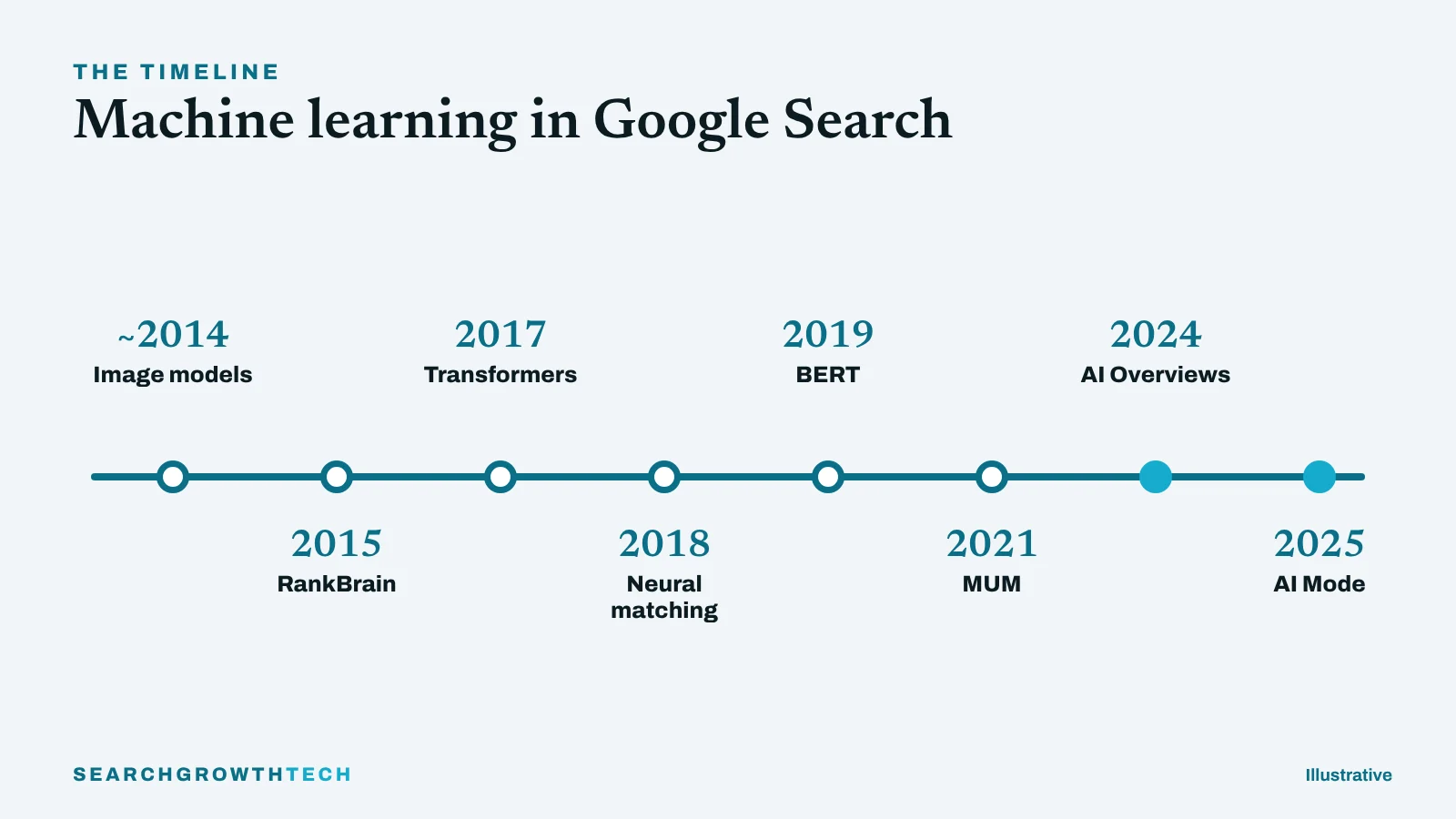
| About 2014 | Image models for SafeSearch | Convolutional neural networks improved image understanding. Todorovic said this was about 12 years ago. |
| 2015 | RankBrain | Google’s first deep learning system in Search. It helps relate words to concepts and rank top results. |
| 2017 | Transformers | Google researchers introduced the Transformer architecture. Todorovic called it the biggest step, the one that led to generative AI. |
| 2018 | Neural matching | Matches queries to pages by looking at the whole query or page, not just keywords. |
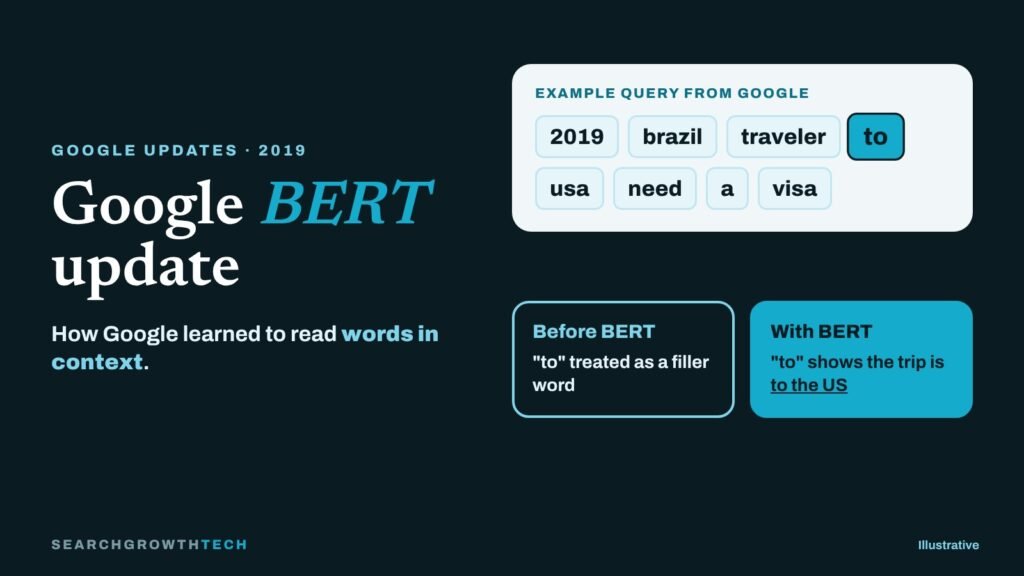
| 2019 | BERT | Understands how word combinations change meaning. Google said it plays a role in almost every English query. |
| 2021 | MUM | Multimodal and trained across 75 languages. Google called it 1,000 times more powerful than BERT, used for specific tasks rather than general ranking. |
| 2024 | AI Overviews | AI-written summaries on top of normal results, built on existing retrieval and ranking. |
| 2025 | AI Mode | A conversational search mode, launched in the U.S. on May 20, 2025, using query fan-out. |
Dates for RankBrain, neural matching, BERT and MUM come from Google’s 2022 post on how AI powers great search results.
SafeSearch: The First Isolated Test Bed
Todorovic, who leads Google’s SafeSearch engineering team, said SafeSearch was one of the first places Google could comfortably apply machine learning directly in Search. Separate systems process images, videos and text and produce a signal, such as how explicit a result is, outside the main ranking flow. If a model had problems, the SafeSearch team could improve it without disturbing everything else. Read more in our guide to Google SafeSearch.
Language Models as New Ranking Signals
Todorovic said systems such as BERT and MUM were built the same way, in isolation, as new signals that supported the existing ranking infrastructure. They were one more thing on top of everything else, rather than a replacement for it. Our explainers on RankBrain and the BERT update cover those launches in depth.
AI Overviews and AI Mode
The newest systems follow the same pattern with a twist. Todorovic said AI Overviews sit on top of Google’s classic retrieval and ranking in their own isolated space. AI Mode still runs on Search, but with new infrastructure and a bigger platform of its own. Our guides to how AI Overviews work and AI Mode vs AI Overviews explain both.
What the History Means for SEO
- Each step improved understanding, not shortcuts. From RankBrain to MUM, the aim was to understand what people mean, which reduces the value of exact-match tricks.
- New layers sit on old foundations. Even AI answers rely on Google’s existing retrieval and ranking, so technical SEO and quality content still decide visibility.
- Change is gradual. Todorovic described the shift as a revolution made of many small steps.
What Each System Changed for SEO
| System | Practical effect |
|---|---|
| RankBrain | Pages could rank for queries that didn’t contain their exact words, if they matched the concept. |
| Neural matching | Google got better at matching a whole query to a whole page, which reduced the value of keyword repetition. |
| BERT | Small words such as “for,” “to” and “without” started to matter, because Google understood how they change meaning. |
| MUM | Used for specific tasks, such as better vaccine information searches and text-plus-image searches in Google Lens. |
| AI Overviews and AI Mode | Answers combine several pages, so pages can be cited for sub-questions, not only the main query. |
Common Myths About AI Ranking
- “AI replaced Google’s ranking.” Google’s engineer says AI Overviews still rely on classic retrieval and ranking.
- “There is one AI algorithm.” Google uses many systems, each built for a specific job and added as a signal or layer.
- “You can optimize for BERT.” Google has long said there is nothing specific to optimize for. Write clearly for people.
- “AI ranking is random.” Every change goes through experiments and launch reviews before it ships.
Why Google Builds AI in Isolation
The pattern across this history is consistent. Google adds a new model where its effect can be measured and controlled, then connects it to the rest of Search as a signal or a layer. SafeSearch classifiers produced an explicitness signal. BERT and MUM added language understanding as extra signals. AI Overviews added a summary layer on top of retrieval and ranking.
Todorovic explained the reason. The more complex a model is, the harder it is to understand which signals matter for relevance, quality and safety, and to fix or replace it later. Building in isolation lets engineers improve a model without breaking everything around it. Every change still goes through Google’s experiments and launch reviews before it ships.
Key Takeaways
- Google used machine learning in Search for over a decade before AI Overviews.
- SafeSearch image models were among the first, then RankBrain in 2015.
- BERT and MUM added language understanding as extra signals.
- AI Overviews (2024) and AI Mode (2025) sit on top of classic Search systems.
- Complex models are hard to debug, so Google added them in isolation first.
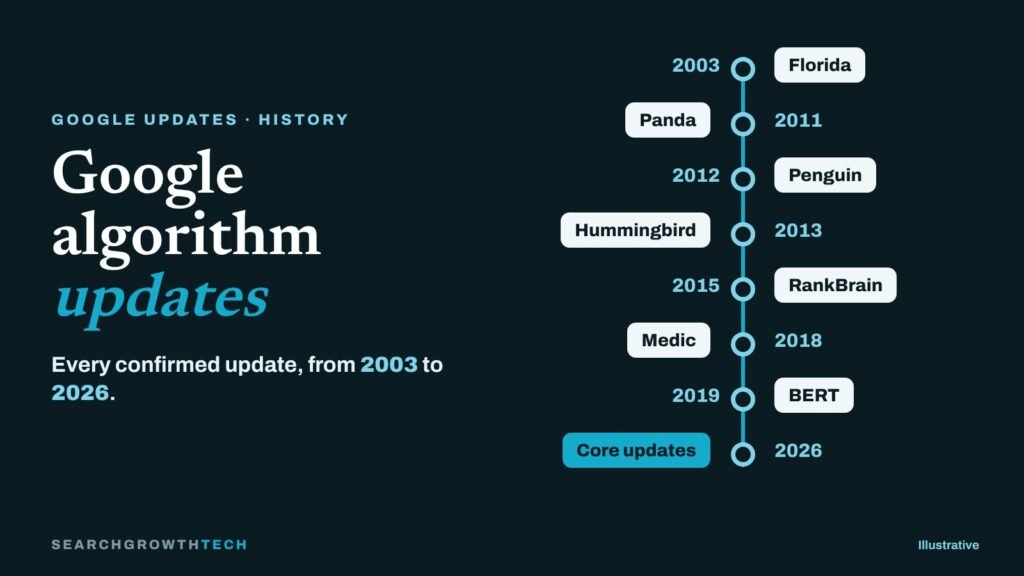
See every launch in our complete list of Google algorithm updates.
FAQs
When did Google start using machine learning in Search?
Google used image models around 2014 and launched RankBrain, its first deep learning system in Search, in 2015.
Is BERT still used in Google Search?
Google said in 2022 that BERT plays a critical role in almost every English query.
Does MUM rank search results?
Google said in 2022 that MUM was not used for general ranking like RankBrain, neural matching and BERT, but for specific applications.
Why are AI models called a black box?
Because engineers can’t always see why a complex model gives a result, which makes debugging and replacing it harder than with simpler models.